
Robot Cleaner for Transit Hubs
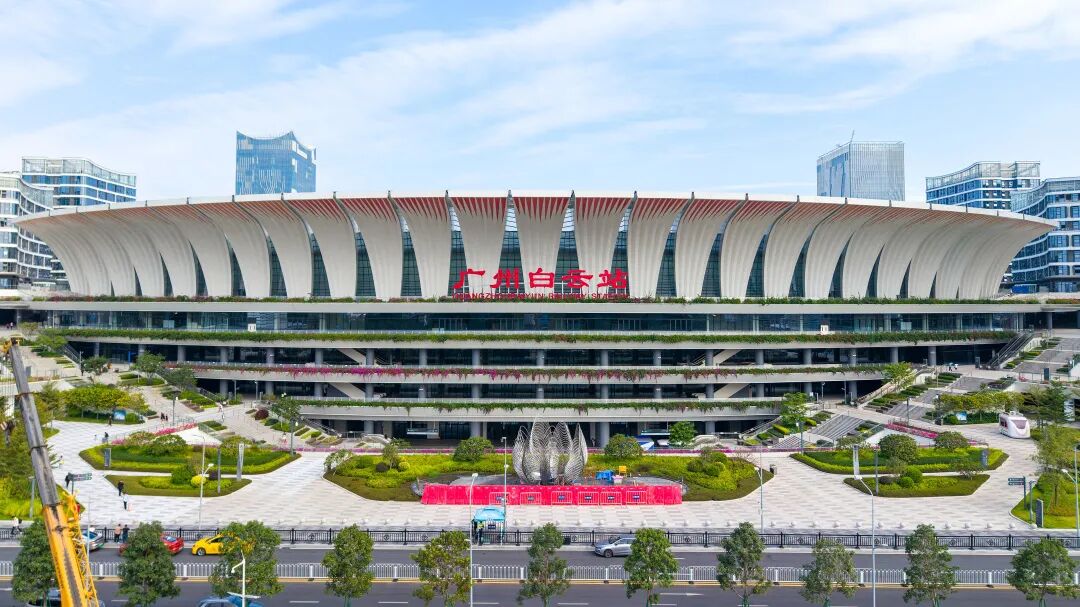
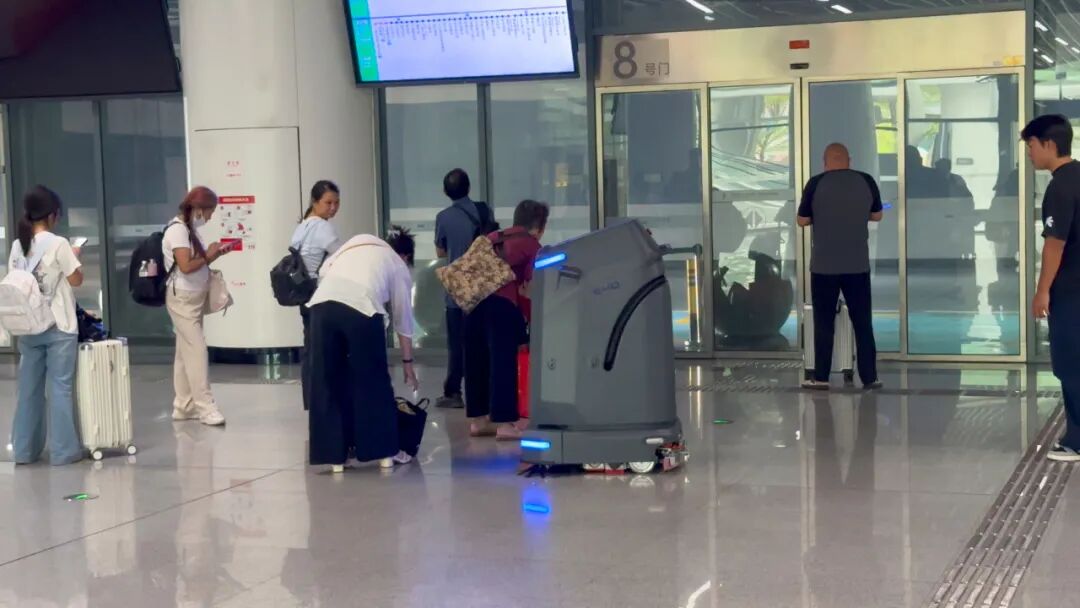
At Guangzhou Baiyun Station’s bus-terminal hall, one Lepu S40 robot cleaner now runs routine floor cleaning: planned routes across a 1,960 m2 public hall, off-peak autonomous shifts, self-served water and charging, and every task logged as traceable data – a robot staff member in a real transit operation.
Robot Cleaner for Transit Hubs
A Hall That Never Empties
Passenger traffic at the hub averaged about 66,000 arrivals and departures a day in 2025, peaking at 211,600 on the busiest day. Dust, grit, footprints and litter regenerate faster than any crew can sweep them away. Escalators, pillars and signage crowd the floor while passengers and luggage keep moving – cleaning must cover everything without blocking anyone. Tile floors turn slippery with leftover mop water, a real hazard for the elderly, children and travelers dragging suitcases. And as a public service window, the hall’s cleanliness shapes both the waiting experience and the hub’s image, with mornings, evenings and holidays demanding a steady, standardized level of cleanliness that shift-bound manual crews struggle to hold.
One Robot, One Hall Map
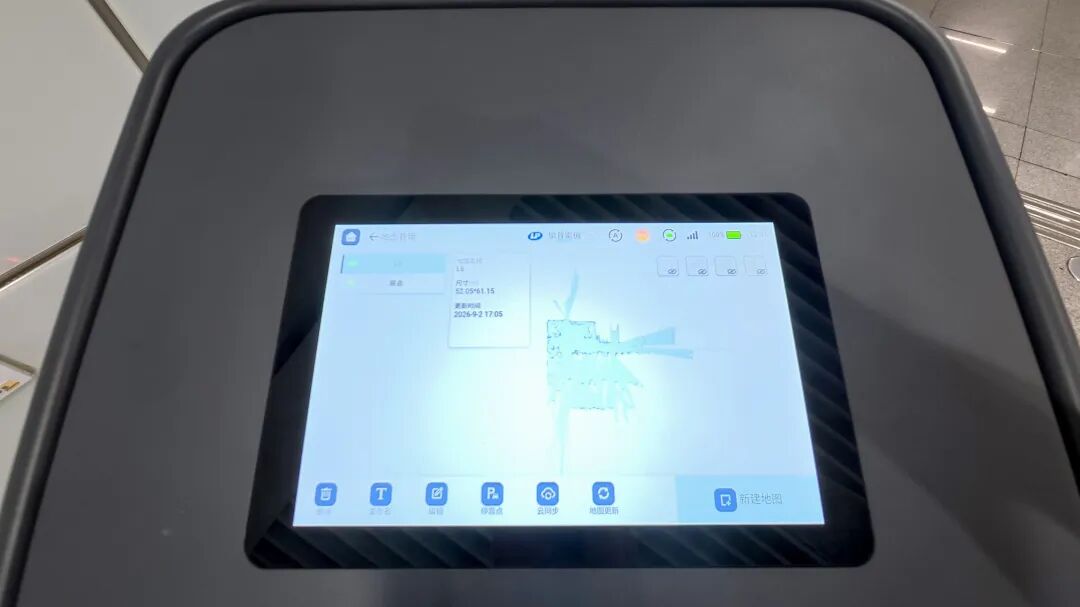
Lepu’s engineers surveyed the hall’s walkways, pillars, signage, passenger flows and floor materials, then built the robot’s working map and cleaning zones – focusing on main public corridors, high-frequency activity areas, and waiting and circulation zones. The robot staff member takes the large-area base cleaning while human staff handle edges, special areas and fresh spills: one LPC-S40 robot cleaner plus one workstation covering roughly 1,960 m².
Off-Peak Shifts, Self-Served Supply
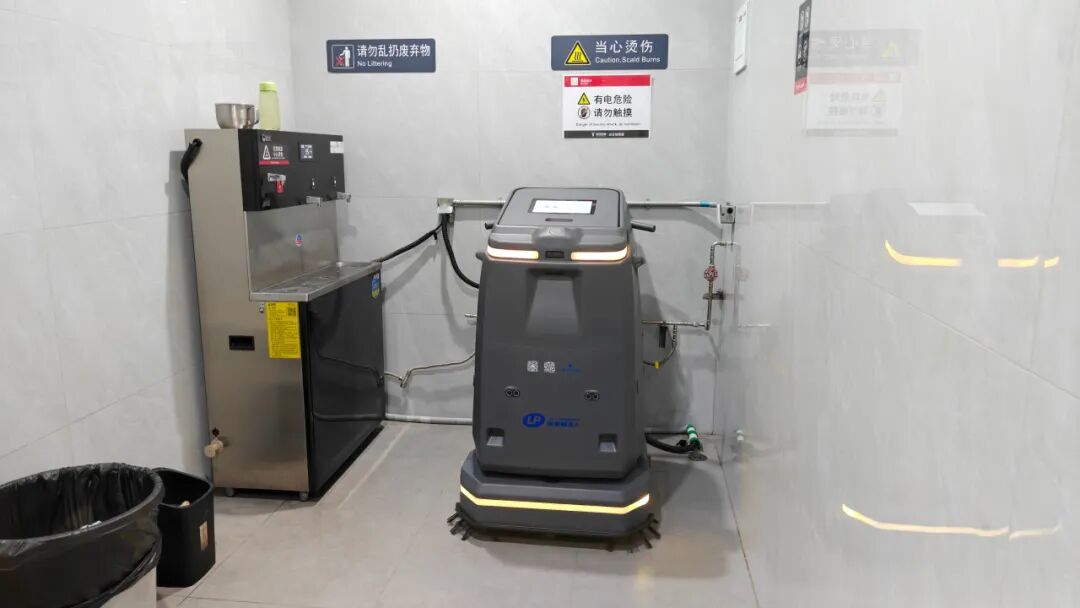
Tasks follow the hall’s daily rhythm – large-area runs happen in quieter windows so waiting passengers and through-traffic are never blocked. On the move, lidar and fused sensors read passengers, luggage and temporary obstacles, re-routing in real time to suit crowded conditions. A workstation docked in the tea room handles resupply: when battery hits the warning level, the S40 returns by itself to refill water, drain waste and recharge, then picks the task back up – continuous operation without a minder.
Every Task on the Record
One real task report from live operation (September 4, 2026): 98% completion in 2 hours 50 minutes, 1,928.32 m² effectively cleaned against a 1,958.93 m² plan, 826 m²/h efficiency, one resupply, 1.8 kW-h of power and 48.2 L of water. Completion rates, coverage, efficiency and consumption all log to the backend, shifting cleaning management from experience to quantified, traceable data. Scheduled shifts plus autonomous resupply extrapolate to a theoretical monthly coverage of about 559,500 m², while human staff spend their time on inspection, spill response and key-area upkeep.
Measured in a Live Terminal
Figures come from live task reports in the operating hall - coverage, efficiency and consumption all traceable.
98% task completion, 1,928 m² cleaned of 1,959 planned
826 m²/h cleaning efficiency, about 2h50m per full task
Theoretical monthly coverage about 559,500 m² on 7x24 scheduling
Self-served resupply: water, drainage and charging without staff
Task, water and power data logged for traceable digital management
Related Solutions
Motor Manufacturing and OEM Supply
Lepu supplies precision motors to global OEM partners including Midea, Gree, LG, and Samsung. With 50 million units annual capacity, >90% self-manufacturing rate, and ISO9001/CE/UL certifications, we deliver consistent quality at scale — serving home appliance, water pump, and automotive auxiliary markets worldwide.
One Fleet, Two Property Scenarios
Drier, Safer Floors for Canteens
Robotics for B2B Factories
Related Products
Get in Touch
Tell us about your project requirements and our expert team will respond within 24 business hours.
- China Mainland: +86 (0757) 26395508
- Global / Overseas: +852 65163699
- Inquiry Email: lepu@lepuedrive.com
- Bases: No. 2, Xiegang Road, Beijiao Town, Shunde District, Foshan City, Guangdong Province, North Gate of LEPU E-DRIVE Headquarters.